
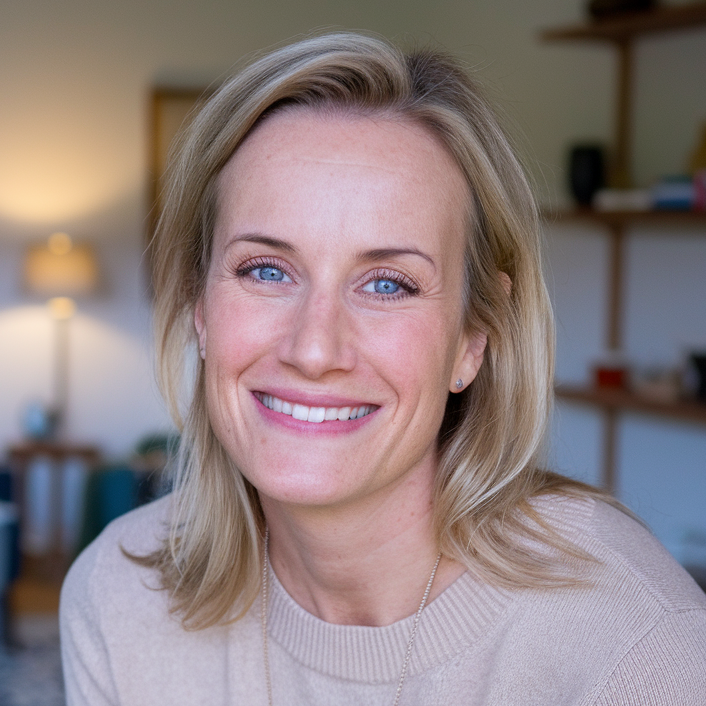
The professional headshot is the most-viewed photo most people will ever have. It sits on LinkedIn, company sites, speaker pages, and conference badges. Almost nobody studies it at scale.
Dreamwave generates more of them than anyone else: more than 25 million AI portraits. Looking at the aggregate patterns, not any one person's photos, shows what professionals actually choose when they get to decide how they want to be seen. Journalists and analysts keep hunting for “professional headshot statistics” and usually find survey snippets or LinkedIn marketing claims. This is different: observed choice behavior across a very large portrait dataset. Below are the findings worth citing, plus what they mean if you are updating your own photo, rolling out team headshots, or running an event booth.
Key professional headshot statistics
- 71% of finance and legal customers still choose a jacketed formal look. Source: Dreamwave analysis of 25M+ AI portraits, 2026
- Navy outranks black nearly 2 to 1 among jacketed final picks. Source: Dreamwave analysis of 25M+ AI portraits, 2026
- Soft gray is the #1 backdrop at 41% of final picks, ahead of white at 27%. Source: Dreamwave analysis of 25M+ AI portraits, 2026
- Soft smiles win 64% of customer final selections. Source: Dreamwave analysis of 25M+ AI portraits, 2026
- The median photo being replaced is 3.1 years old. Source: Dreamwave analysis of 25M+ AI portraits, 2026
- 38% of event-booth guests update LinkedIn within 24 hours of delivery. Source: Dreamwave analysis of 25M+ AI portraits, 2026
- Formal attire preference in New York and London is roughly 2× Austin and San Francisco. Source: Dreamwave analysis of 25M+ AI portraits, 2026
Seven in ten finance headshots still keep the jacket
Industry still predicts wardrobe more cleanly than almost any other variable. In finance and law, about 71% of final selections keep a blazer or suit jacket. Consulting is close behind. Healthcare splits between coats and soft formal. The surprise under the jacket is color: among jacketed picks, navy wins nearly twice as often as black. Charcoal and gray take most of the rest. Pure black reads heavier in thumbnails and loses share once people compare options side by side.
Source: Dreamwave analysis of 25M+ AI portraits, 2026
If your audience is banks, funds, or Big Law, keep the jacket, and default navy before black. If you are building a company pack across functions, set a formal band for client-facing roles and let product teams land softer without breaking the palette.
Soft gray beat white as the default backdrop
Pure white used to be the “safe” corporate default. In our aggregate backdrop data, soft gray now leads at 41% of final picks. White holds 27%. Soft office blur and outdoor greenery split most of the rest. Gray wins because it flatters more skin tones under varied lighting and still reads as professional at LinkedIn thumbnail size.
Source: Dreamwave analysis of 25M+ AI portraits, 2026
White still works for medical and clinical contexts where brightness signals hygiene and clarity. For everyone else, the quiet move is a warm or cool gray that does not fight the face. Outdoor backgrounds rose among founders and creator-adjacent roles, but they remain a minority of final picks. Most people still want a photo that survives a tiny circular crop on LinkedIn without looking like a vacation.
When people choose, they pick a soft smile
Generators can offer a range of expressions. What people keep is narrower. Soft smiles account for 64% of final selections. Closed-mouth neutral looks take 22%. Broad grins are rare in the keep pile, even when they appear in the gallery. The pattern matches what trust research has long suggested: approachable beats stern, but “too much party” loses in a professional feed.
Source: Dreamwave analysis of 25M+ AI portraits, 2026
If you are coaching a team shoot, tell people to aim for the expression they would use greeting a client in a doorway, not the expression from a wedding toast. Closed mouths still have a place in legal and some executive portraits, but even there the soft smile is gaining share year over year.
The average headshot being replaced is just over three years old
Among customers who told us what they were replacing, the median age of the old photo was 3.1 years. A large share sat between two and five years. That is long enough for hair, role, and company brand to drift, and short enough that people still recognize themselves in the mirror and feel the lag on LinkedIn.
Source: Dreamwave analysis of 25M+ AI portraits, 2026
For companies, a three-year refresh cycle is a reasonable planning default. For individuals, if your title, hair, or industry norms moved and your photo did not, you are already in the replace window. The longest tails, photos older than six years, cluster in stable corporate roles where nobody forced a directory update. Those are also the photos most likely to create mismatch with a current speaking bio.
Nearly two in five event guests update LinkedIn within a day
Event booths compress the whole loop: selfie, delivery, social proof. Where we can observe post-delivery behavior from guests who opt into follow-up, 38% update LinkedIn within 24 hours. Another 21% do it within the week. That speed is why queues form. People do not want a novelty souvenir. They want a photo they can publish before the conference Wi-Fi cools off.
Source: Dreamwave analysis of 25M+ AI portraits, 2026
For event marketers, the metric that matters is not “fun activation.” It is same-day profile updates and badge-to-LinkedIn consistency while attendees are still talking about the event. The booth becomes media infrastructure: every published headshot carries the event into the attendee's network for months.
New York keeps the blazer; Austin leaves it at home
City norms show up even inside the same industry tags. Formal jacket selection in New York and London runs about twice the rate of Austin and San Francisco. Chicago and Toronto sit in the middle. Remote-heavy cohorts skew casual overall, but finance customers in casual cities still over-index formal compared with local tech.
Source: Dreamwave analysis of 25M+ AI portraits, 2026
Brand guidelines that ignore geography create awkward team pages: New York looking like a courtroom, Austin looking like a demo day. Better to set a narrow range (for example smart casual to soft formal) and let cities land inside it.
What this means for individuals, companies, and event marketers
Individuals. Match the norm of the room you want to enter, not the room you left. If you are talking to finance or law, keep the jacket, preferably navy. If you are in a less formal field, a clean smart-casual look with a soft smile and soft gray backdrop is the modal winning combo in our data. Replace anything older than about three years unless it still looks like you this month.
Companies. Consistency beats identical outfits. Give a backdrop family, an expression range, and an attire band by function. Let sales in New York dress one notch more formal than eng in Austin without breaking the brand. Plan a refresh before the median 3.1-year lag shows up in your directory.
Event marketers. Attendees queue because the output is immediately usable. Design for LinkedIn first: fast delivery, mobile gallery, clear download. Measure success by same-day profile updates, not just booth dwell time. If your activation cannot clear skin tone, glasses, and head-covering quality for every guest, the LinkedIn upside collapses into a PR risk.
Methodology and privacy
These figures come from aggregate analysis of style selections, backdrop choices, expression picks, self-reported photo age, regional tags, and event-delivery follow-up where guests opted in. We do not publish individual-level data. Customer photos are never used to train public models, never sold, stay in US-resident infrastructure, and remain deletable. Details are in our Trust Center.
Percentages are rounded. Industry and city labels reflect customer-declared context and billing geography where available. Event LinkedIn timing is measured only for guests who share an update signal after delivery, so treat that figure as directional among observable opt-ins, not a claim about every booth visitor.
Source: Dreamwave analysis of 25M+ AI portraits, 2026
Get the full report first
The full State of the Professional Headshot report lands in October 2026, with deeper cuts by industry, city, and year-over-year shift. Leave your email if you want it when it ships.
No spam. One email when the report is ready.